

Harmonics from Large Chillers: Centralized or Point-of-Use Compensation?
Sep 23 /2026
In large data centers, chillers, pumps, and other cooling equipment play a critical role in maintaining reliable heat dissipation. To improve control accuracy and reduce energy consumption, these systems are commonly equipped with variable frequency drives (VFDs). However, the rectifier stage of a VFD also generates harmonic currents.
A common approach is to install active harmonic filters (AHFs) in the electrical room to provide centralized harmonic compensation for multiple loads. But for a single high-power chiller, is it always necessary for harmonic currents to travel through the feeder before being compensated at a centralized point?
Centralized Compensation: One System for Multiple Loads
Centralized harmonic compensation typically involves installing AHFs at a common point in the distribution system, where they detect and compensate for harmonics generated by multiple downstream nonlinear loads.
This approach keeps harmonic mitigation equipment in one location, making system management and maintenance relatively straightforward. It is particularly suitable when multiple harmonic-producing loads are distributed across the system.
However, even when harmonics are compensated centrally, the feeders and associated distribution equipment between the loads and the compensation point still carry harmonic currents.
For large chillers located some distance from the electrical room, the impact of these harmonic currents along the feeder path should also be considered when designing the mitigation scheme.
Point-of-Use Compensation: Mitigating Harmonics at the Source
Point-of-use compensation places the AHF close to a major harmonic-producing load, such as a large chiller. The filter continuously detects the harmonic current generated by the equipment and injects an opposing compensation current in real time.
By mitigating harmonics closer to their source, the amount of harmonic current flowing upstream can be significantly reduced. This shortens the path over which harmonic currents circulate and helps limit their impact on upstream feeders and distribution equipment.
For high-power chillers with long operating hours and a clearly identifiable harmonic contribution, point-of-use compensation also provides a more defined compensation target and can reduce the compensation demand placed on centralized filtering equipment.
Point-of-use compensation, however, involves more than simply changing the installation location. System design should also take into account chiller capacity, load variation, dominant harmonic orders, measurement location, equipment interfaces, available installation space, ventilation and heat dissipation, and future maintenance requirements.
For this reason, point-of-use harmonic mitigation is often best considered during the equipment integration or project design stage.
Harmonic Mitigation for a Data Center Chiller Project
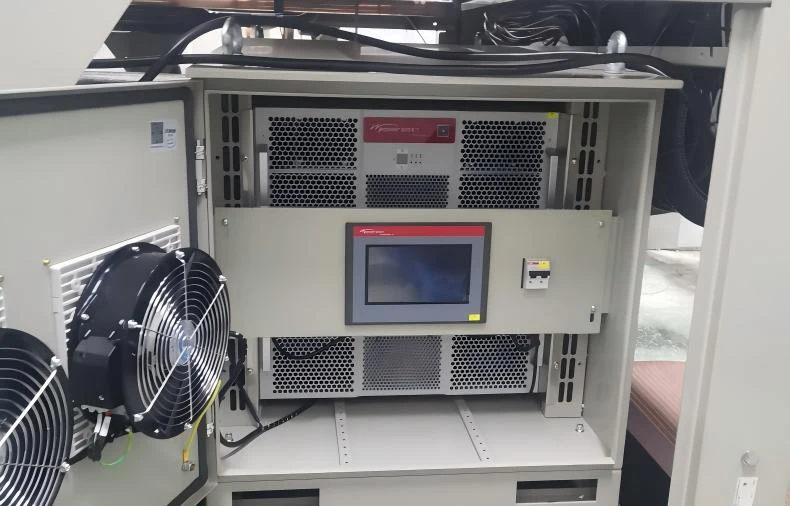
In a chiller integration project for GDS, INPOWER adopted a point-of-use harmonic mitigation solution by integrating the active harmonic filter directly into the available structural space of the chiller system.
The AHF and chiller were assembled and commissioned together before delivery. The design took into account the chiller structure and site installation requirements, including equipment interfaces, cable routing, ventilation and heat dissipation, and maintenance access.
During integrated commissioning, the active harmonic filter operated at a 70% load rate. The system achieved a power factor of 0.981 and a total harmonic current distortion (THDi) of 4.7%, meeting the project requirement of keeping THDi below 5%.
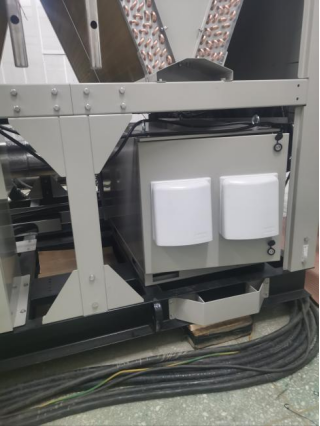
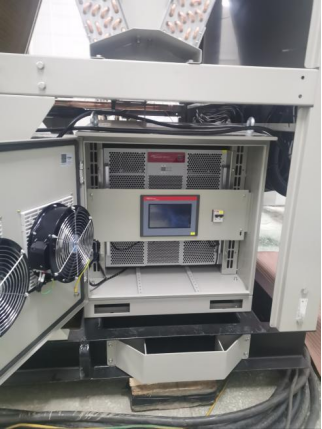
Active harmonic filter integrated with the chiller system
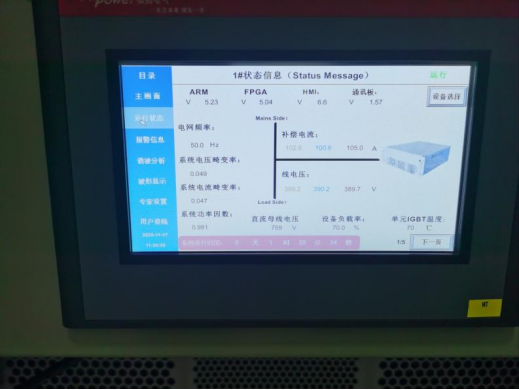
Integrated commissioning interface
Centralized or Point-of-Use? It Depends on the Application
There is no one-size-fits-all answer when choosing between centralized and point-of-use harmonic compensation.
Centralized compensation can be suitable when multiple harmonic sources are located within the same area or when the objective is to improve power quality at a common monitoring point.
Point-of-use compensation may be more appropriate for large individual loads that are located far from the electrical room and have a clearly identifiable harmonic contribution.
For more complex distribution systems, the two approaches can also be combined based on load distribution and system architecture.
Whether harmonics from a large chiller should be compensated centrally or closer to the source ultimately depends on harmonic measurement results, feeder length, load operating characteristics, and the overall electrical distribution system.
INPOWER provides power quality measurement, system analysis, solution design, equipment configuration, and project implementation services. If you are planning harmonic mitigation for chillers or other high-power equipment, contact us to discuss the most suitable approach for your application.
-
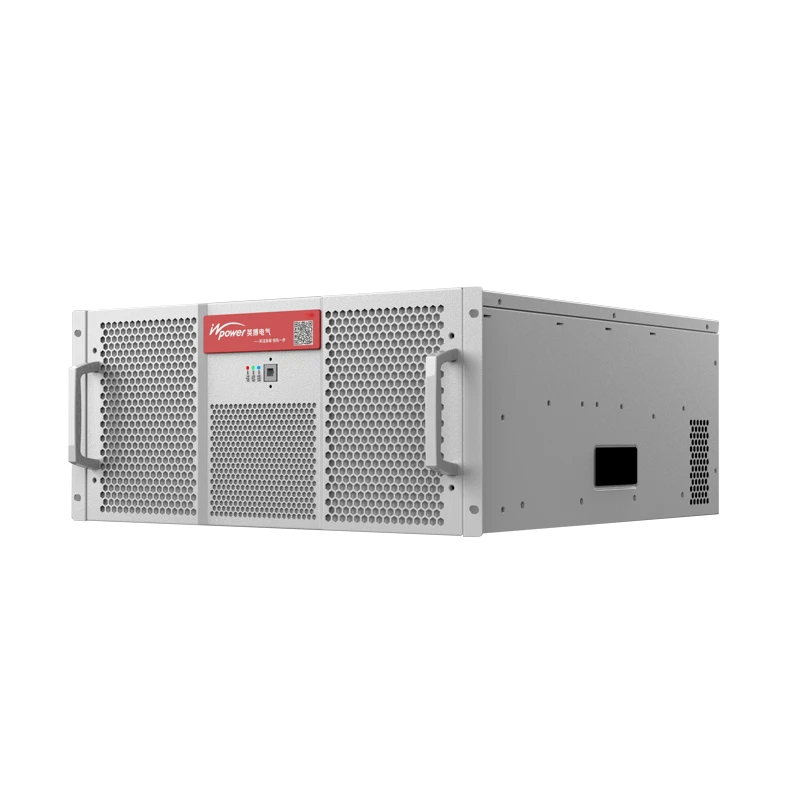
BLUEWAVE Active Power Filter
The BLUEWAVE 3-Level Active Power Filter utilizes advanced digital control and IGBT-based power electronics to monitor and neutralize harmonics in real time. By injecting an equal and opposite compensation current, it ensures a clean, fundamental frequency supply for non-linear loads.
-
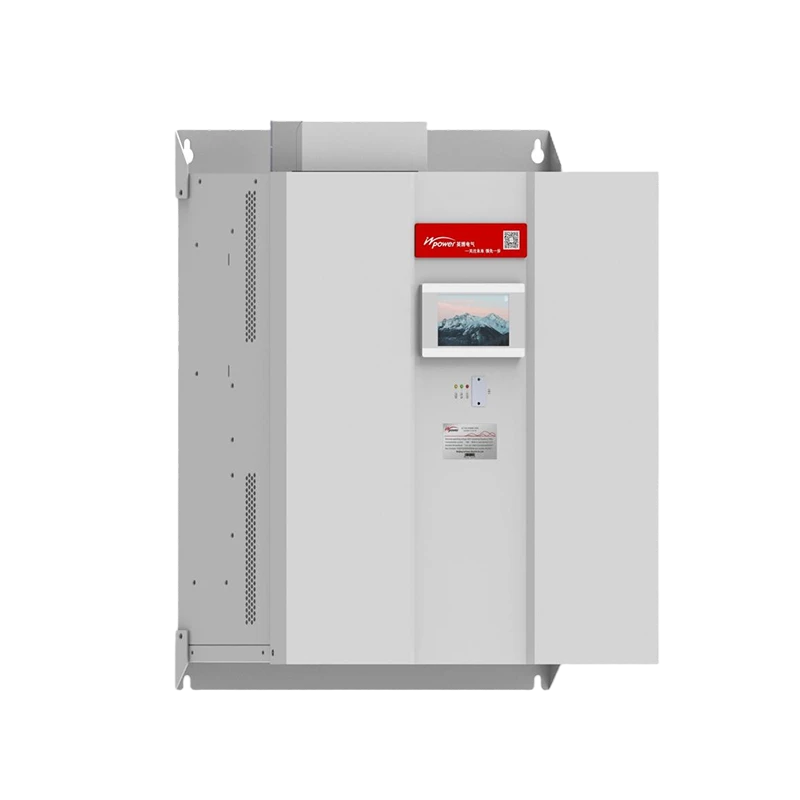
INPSVG LV Static Var Generator
The INPSVG is a dynamic reactive power compensation solution based on power electronics technology. It provides bidirectional and stepless reactive power regulation with fast response, maintaining stable power factor performance without over- or under-compensation.
-
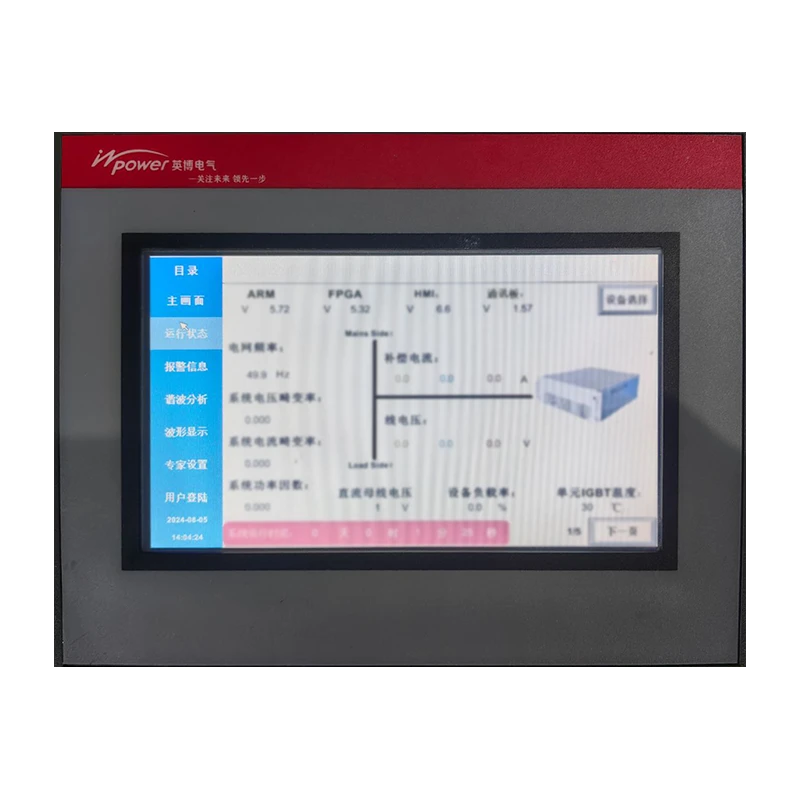
LSVG-2000 Dynamic Filtering and Compensation Controller
LSVG-2000 Dynamic Filtering and Compensation Controller is a controller specially tailored for IN-POWER series products, and widely used in active power filtering, automatic reactive power compensation, and other fields. The most significant feature is the ability to unify the control of active filters and static var generators according to the comprehensive management goals of system power quality in order to improve the system power factor, reduce the system current distortion rate, and optimize the system three-phase unbalance.
-
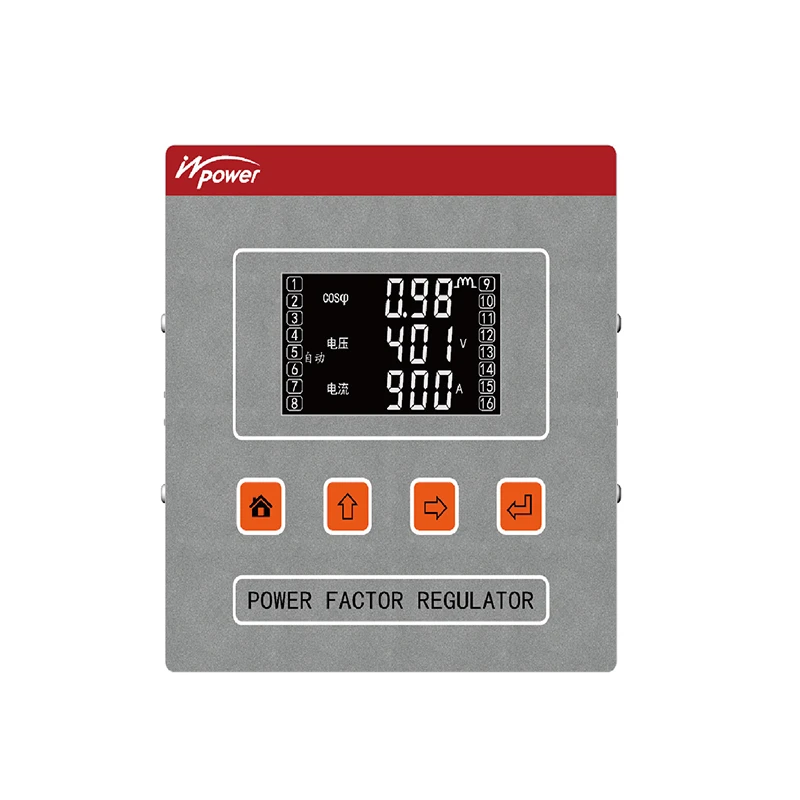
BKU Power Factor Controller
The BKU series is a high-performance reactive power compensation controller designed for low-voltage power systems from 0.20 kV to 0.75 kV. Powered by a 32-bit ARM processor, it provides precise reactive power control, stable operation, and efficient power factor improvement with a compact and reliable design.
-
Previous:
None
Latest News
-
Harmonics from Large Chillers: Centralized or Point-of-Use Compensation?
High-frequency UPS systems can introduce capacitive reactive power into data center distribution systems, creating new challenges for power factor control and resonance management.
-
INPOWER Holds Its Second Employee Health Run
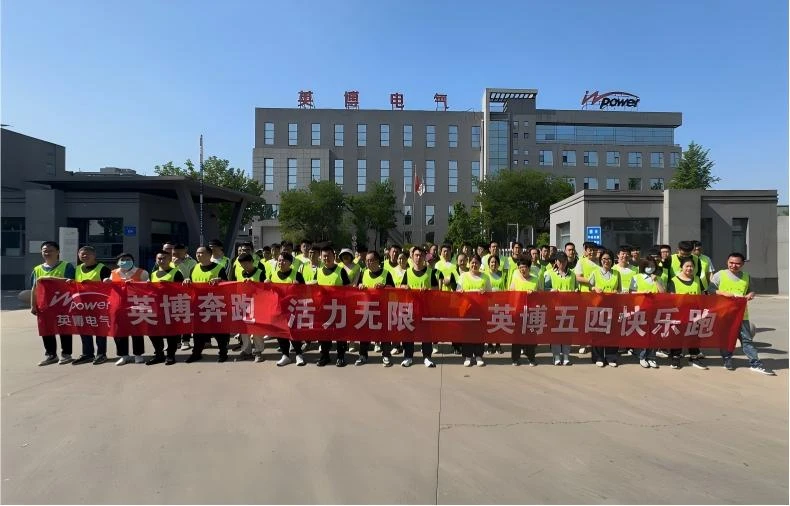
INPOWER recently held its second Employee Health Run, bringing together hundreds of employees for a 6-kilometer event at the company’s industrial park.
-
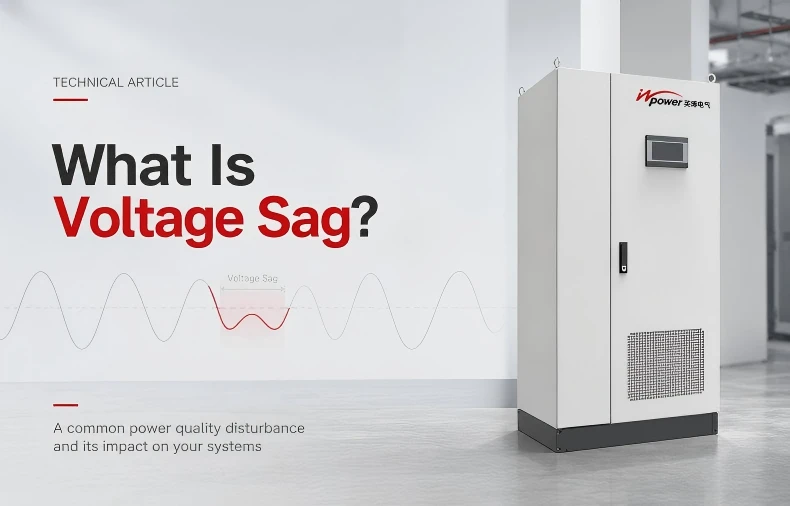
Voltage sag is a common power quality disturbance that can last for only a fraction of a second but may cause significant disruption to industrial operations.

